
Spiked or Spikeless: Choosing Golf Shoes as Courses Soften for Winter
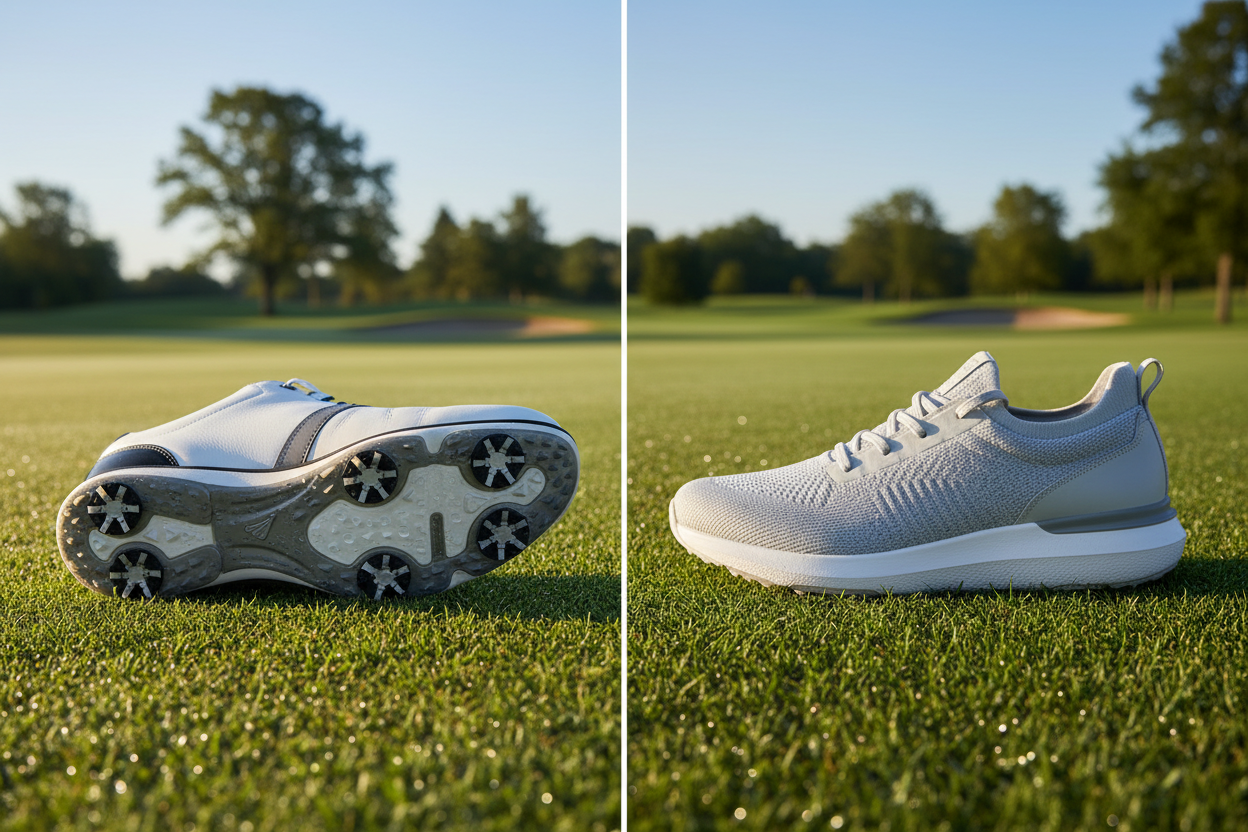
As October turns into November, golf courses across the UK begin to change underfoot. The firm, fast fairways of late summer give way to softer turf, morning dew lingers well into the day and the first proper rain of the season leaves bunker faces and slopes slick. For golfers who play through the winter, footwear suddenly matters a great deal more than it did in July.
The question that comes up most often is whether to wear spiked or spikeless shoes. Spikeless designs have grown enormously in popularity over the past decade, thanks to their comfort and versatility, but traditional spiked shoes still have a loyal following, particularly among winter golfers. Each has genuine strengths, and the right choice depends on the course, the conditions and the individual.
There is no single correct answer, but understanding the differences helps golfers make a sensible decision before the wettest months arrive.
It also helps to be honest about how and where most winter golf will actually be played, since a shoe that excels in one setting can disappoint in another. Course type, drainage, the time of day and even the walk from the car park all have a bearing on the decision.
What the winter course asks of a golf shoe
Golf shoes have two jobs in winter, providing grip during the swing and keeping the feet dry and warm over four hours. Grip matters because the golf swing generates considerable rotational force, and any slip at the moment of impact costs both distance and accuracy. On soft or wet ground, that force is harder to resist.
Waterproofing is the other priority. Wet grass soaks through poorly protected uppers surprisingly quickly, and cold, damp feet make for a miserable back nine. Most quality golf shoes now offer waterproof uppers, and some manufacturers back that protection with a warranty, but the level of protection varies from model to model. Function18 lists a wide range of the latest golf shoes from leading brands, which makes it easy to compare features such as waterproofing, sole design and upper materials before deciding which suits winter play best.
Comfort over distance should not be overlooked either. Winter rounds are often walked rather than played from a buggy, as many clubs restrict buggies when the ground is wet, so a shoe needs to remain comfortable over five or six miles of soft, uneven ground. Cushioning, heel support and a well-shaped toe box all play their part.
The case for spiked shoes
Spiked golf shoes use replaceable cleats, usually made of soft plastic, that screw into the sole. These cleats bite into the turf, providing a level of traction that is hard to match on wet, soft or sloping ground. For golfers who play hilly parkland courses or who swing with a lot of speed, that extra grip can be reassuring when conditions turn heavy.
Spiked shoes also tend to have a slightly more structured build, which many golfers find supportive over a long walk on uneven ground. The cleats can be replaced as they wear down, extending the life of the shoe. Function18 offers a broad selection of spiked golf shoes, including traditional and more athletic styles, for golfers who want maximum stability through the winter months. The main drawbacks are that they are less comfortable off the course and some clubs prefer them to be changed before entering the clubhouse, so they are rarely worn for anything other than golf.
There is also the question of course care. Some clubs ask golfers to avoid certain types of footwear during the winter to protect the greens, and soft spikes were developed partly for this reason. Checking the club’s guidance at the start of the season is sensible, particularly when playing as a visitor.
The case for spikeless shoes
Spikeless golf shoes replace removable cleats with a pattern of moulded nubs or lugs on the sole. Designs have improved dramatically, and modern spikeless soles offer far better grip than early versions. They are lighter, more flexible and more comfortable to walk in, and they move easily from the course to the clubhouse or the car.
In dry or firm conditions, spikeless shoes perform very well, and many golfers wear them all year. In winter, their performance depends heavily on the course. On free-draining heathland or links, where the ground stays relatively firm, a good spikeless shoe is often perfectly adequate. On heavy clay parkland after a week of rain, some golfers find the grip less dependable. Tread patterns vary considerably from one design to the next, and browsing the spikeless golf shoe range at Function18 is a useful way to compare sole designs with winter conditions in mind.
Versatility is the main argument in their favour. For golfers who drive to the course, play a round and then head straight on to other commitments, a spikeless shoe saves a change of footwear and often looks smart enough for the clubhouse bar. Many designs now borrow heavily from casual trainers, which adds to that appeal.
Matching the shoe to the course
Perhaps the most useful question for any golfer is not which type of shoe is better, but which suits their home course in winter. A links golfer playing on sandy, quick-draining ground faces very different conditions from someone playing a parkland course on heavy clay. Heathland courses sit somewhere between, often firm underfoot but with slippery slopes after rain.
Golfers who regularly walk hilly courses, play early in the morning when frost and dew are heaviest, or simply value maximum traction tend to favour spikes from November to March. Those whose courses drain well, who play in the afternoon or who prefer comfort above everything else are often happy to stay in spikeless. Some keep a pair of each and choose on the morning, which is perhaps the most practical approach of all for keen winter players. Function18 stocks both types across many brands, so building a pair of each into a winter rotation is straightforward.
Temporary tees and greens, common at many clubs through the winter, can also change the picture. Some temporary tees are mats, where spikes offer little advantage, while temporary greens may be cut on fairway ground that becomes muddy and uneven. Golfers who know their course well are best placed to judge how these winter arrangements affect their footwear needs.
Brands, fit and winter shoe care
Whichever style is chosen, fit remains critical. Winter socks tend to be thicker, so it is worth trying shoes with the socks that will actually be worn. A shoe that feels snug in summer can become uncomfortably tight in January.
FootJoy has long been one of the most established names in golf footwear, and the FootJoy golf shoe collection spans both spiked and spikeless designs, giving golfers the option to compare like for like within one brand. Other labels such as Nike, adidas and Puma have also built strong spikeless ranges, often with a more athletic look. All of these are stocked by Function18.
Care matters too. Mud and water take their toll on leather and synthetic uppers alike, so cleaning shoes after each round, stuffing them with newspaper to dry naturally and keeping them away from direct heat all help them last. Checking cleats regularly and replacing worn ones before the wettest months is a small job that pays off on the first frosty morning.
The spiked versus spikeless debate is unlikely to be settled any time soon, and that is no bad thing. Both styles have improved greatly, and golfers today have more good options than ever before.
What matters most is matching the shoe to the conditions. A little thought now, before the heaviest rain arrives, can make the difference between a winter of sure-footed, comfortable golf and one spent slipping on wet slopes and squelching between shots. For those who love the game in its quieter months, that is well worth getting right.


